Product angles
Use ad and creative patterns to spot what sellers are testing.
Use case
Dropshipping research is where Winning Hunter's public positioning is clearest: find ads, check competitors, evaluate store signals, and move toward winning products with more context than a single ad swipe file.
Independent guide. Product-directed links may be affiliate links, and current terms should be verified on the live product page.
Last checked: August 12, 2026.
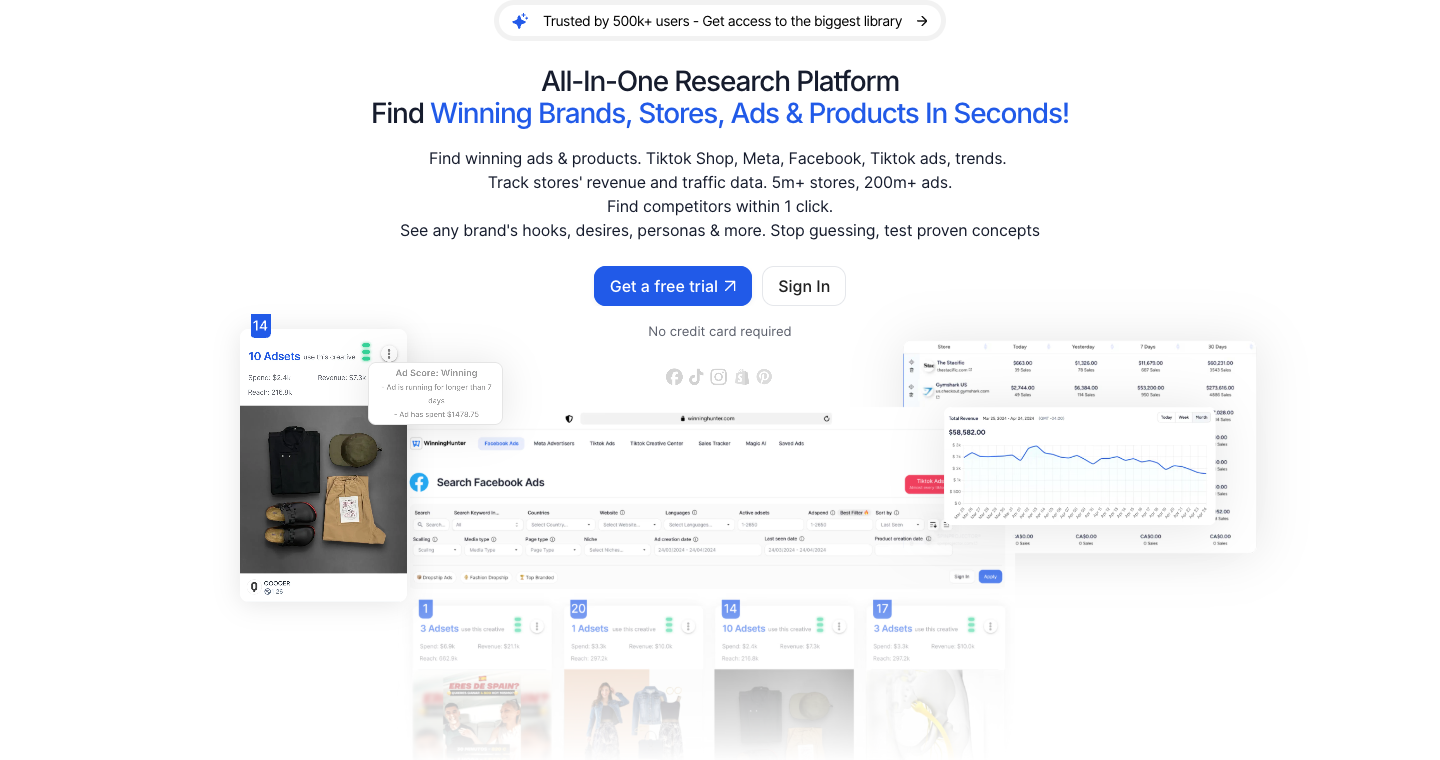
Use ad and creative patterns to spot what sellers are testing.
Look for saturation and similar-store signals before committing budget.
Treat the tool as research input, not a guarantee of product success.
Use case
A dropshipping team usually needs to answer three questions before testing: is there demand, are competitors scaling, and can the product be sourced and marketed profitably. Winning Hunter is positioned to help with the first two by combining ad research with store and competitor context.
The platform should still be paired with margin checks, supplier research, fulfillment quality, creative testing, and customer support planning. A research tool can point you toward products and angles worth investigating, but it cannot decide whether your supplier can ship quickly, whether the product has enough margin, or whether your creative team can produce ads that stand out.
Use ad research to identify offers, hooks, formats, and product categories.
Look for how many sellers and creatives appear around the same product angle.
Use store tracking signals as one input before deciding what to test.
Use case
A useful workflow starts with product discovery, but it should not stop there. First, collect ads and store examples around a product category. Second, group those examples by hook, price point, audience, offer, and creative style. Third, look for saturation signals: too many similar ads, too many identical stores, or a product angle that appears to be aging. Finally, check whether you can source the product with a delivery promise and margin that still leaves room for testing.
Winning Hunter can fit into the first half of that workflow if you need faster access to ad examples, store context, and competitor clues. The second half still belongs to your business process. You need to inspect supplier quality, product claims, compliance risk, refund risk, shipping time, landing page quality, and your own ability to make original creatives.
Save ads, stores, products, and competitor examples before drawing conclusions.
Organize examples by audience, offer, product angle, and creative hook.
Drop products that look crowded, low-margin, risky, or hard to fulfill.
Only test when sourcing, margin, and creative angles all survive the review.
Use case
A paid tool may be unnecessary if you are still learning the basics of ecommerce, testing only one product occasionally, or browsing ads without a repeatable decision process. In that stage, free ad libraries, competitor store reviews, manual spreadsheets, and small-budget tests can teach you more than another subscription.
Consider Winning Hunter only when you can name the repeated tasks it should speed up. For example: finding fresh ad examples, checking competitors before choosing a product, reviewing store signals, or comparing product angles across channels. If you cannot describe the weekly workflow, wait until you can.
Manual research may be enough when you only need inspiration once in a while.
A dashboard will not help much if you have no product criteria.
Tool value rises when research is a routine part of product selection.
Use case
If this use case fits your workflow, move to the workflow guide and then pricing. If you are still unsure, compare alternatives first. A strong path is dropshipping use case, then how it works, then pricing only after you have a clear research routine.
Use case
Winning Hunter for dropshipping is most useful when product discovery, ad research, and store checks are part of a repeat workflow.
Use Winning Hunter review, Winning Hunter pricing, and Winning Hunter alternatives to see whether the tool earns a place in your process.
Use this when product research is the job.
Use this when you want the buying context.
Use this when you want the plan fit.
Use this when you want to compare tools.
Common questions
No tool can guarantee a winner. It can help surface research signals that still need testing and business judgment.
The official site also speaks to ecommerce entrepreneurs, creative directors, agencies, affiliates, and brand owners.
Check channels, filters, store tracking limits, pricing, cancellation terms, and whether your team will use it often enough.
Validate supplier reliability, shipping times, product claims, margin, refund risk, landing page quality, and creative production.
Read pricing after you know which repeated research tasks the tool should speed up for your dropshipping workflow.
Ready to verify the live offer?
Use the live product flow for current pricing, trial availability, login access, plan limits, and checkout terms.