Discover
Find ads, stores, products, and competitor examples.
Workflow guide
Winning Hunter is publicly positioned around a research workflow: find ads and products, check saturation, review store data, and move toward product decisions. This page turns that into a practical evaluation path.
Independent guide. Product-directed links may be affiliate links, and current terms should be verified on the live product page.
Last checked: August 12, 2026.
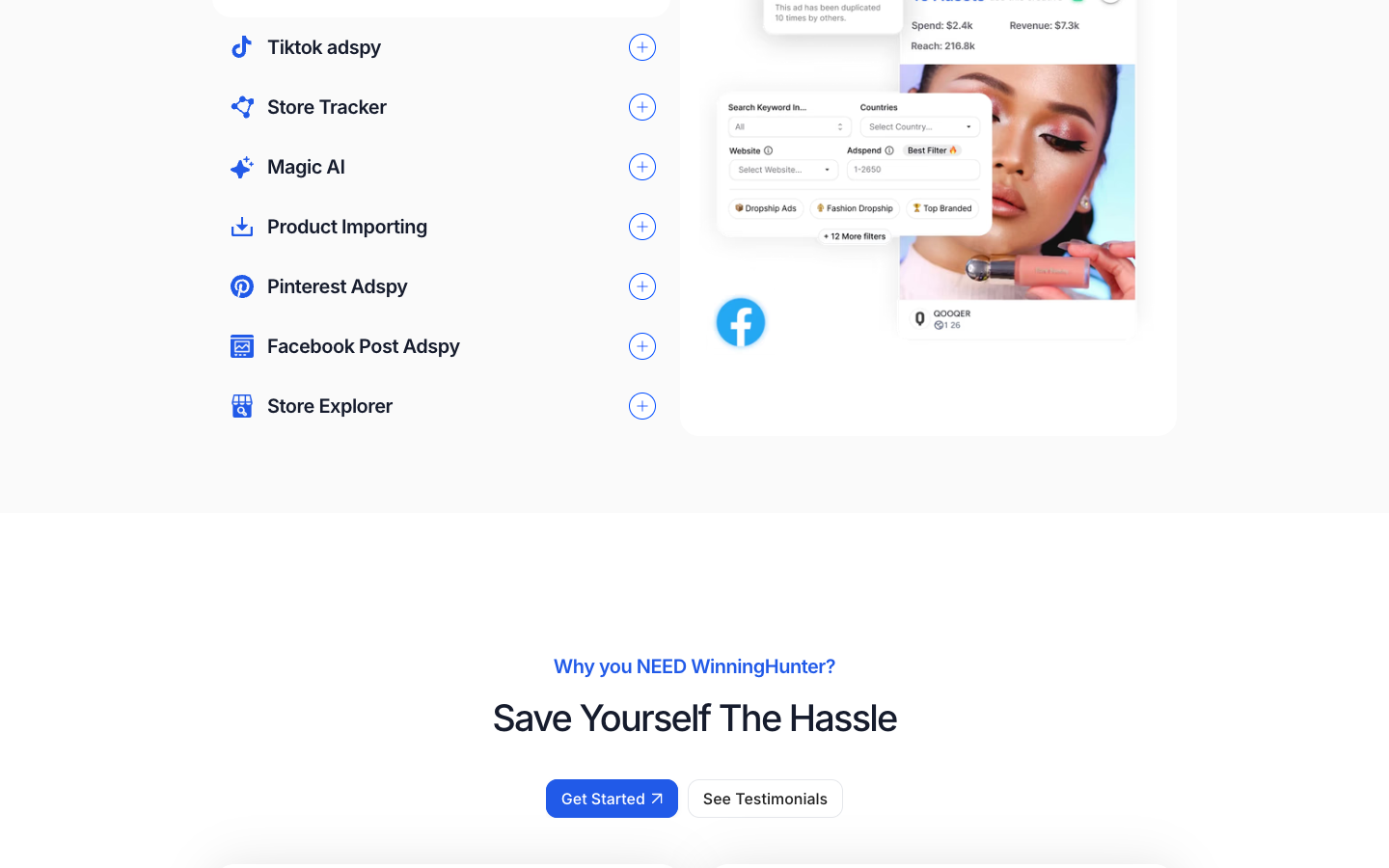
Find ads, stores, products, and competitor examples.
Look for ad spend, store activity, saturation, and creative patterns.
Use signals to plan tests, not to skip business validation.
Workflow guide
The public how-to messaging on the official site points to spotting a winner, checking saturation, confirming store sales data, and importing or acting on products. For a buyer, the important question is whether those steps match your existing research process.
If you only need occasional inspiration, you may not need a paid workflow. If research is daily or team-based, the time savings can be easier to evaluate. The workflow should help you move from raw examples to clearer decisions.
Find ads and products with signals worth investigating.
Look for how many competitors appear around the same product.
Use store signals as one layer of validation.
Move into your own creative, margin, and fulfillment checks.
Workflow guide
The discovery step should prove that a product angle is worth more attention, not that it is guaranteed to work. Look for repeated hooks, active creatives, store examples, and product categories that match your audience. The competition step should help you decide whether the opportunity is still fresh enough to test or already crowded.
The store review step should add context. A store signal can show that a product angle has commercial activity, but it does not confirm your supplier, margins, shipping time, or brand positioning. The final decision step should combine the research signal with business checks: landed cost, ad budget, refund risk, creative supply, and customer experience.
There are enough examples to justify deeper review.
The market is not obviously too crowded for your angle.
Comparable stores give useful context without becoming a copy plan.
Margin, fulfillment, and creative quality still support a test.
Workflow guide
Before subscribing, write down the research tasks you expect Winning Hunter to handle. For example: finding Meta or TikTok ad examples, checking competitor stores, reviewing saturation, collecting product ideas, or moving products into your own workflow. Then compare those tasks with what you already do manually.
During any trial or first month, measure practical output. Did you find better examples faster? Did the filters reduce noise? Did store context change which products you rejected? Did the workflow help you prepare tests, or did it only create more screenshots? These answers matter more than a feature list.
List the exact research steps you want to speed up.
Track whether the tool reduces repetitive searching.
Check whether you reject weak ideas faster.
A tool unused by the team is rarely worth keeping.
Workflow guide
Winning Hunter can support ecommerce research, but it should not be treated as the entire business system. It does not remove the need to negotiate with suppliers, inspect product quality, build landing pages, produce creatives, handle fulfillment, or serve customers.
That boundary is important because many buyers look for a shortcut. A research platform can help you identify signals and competitors. It cannot make a weak offer strong, fix poor fulfillment, or replace disciplined testing.
Workflow guide
After you understand the workflow, pricing is the strongest next page. If you are comparing tools, alternatives should come before clicking through. If you searched because you are unsure whether the product is trustworthy, read the legitimacy guide before opening the product destination.
Workflow guide
How does Winning Hunter work is the question behind most brand searches when a visitor wants the workflow before the price.
Use Winning Hunter review, Winning Hunter pricing, and Winning Hunter alternatives to see how the research path fits your own process.
Use this when you want the workflow answer.
Use this when you want the product read.
Use this when you want the billing answer.
Use this when you want a comparison.
Common questions
The official page describes using ad libraries, filters, store tracking, competitor discovery, and product importing as part of the workflow.
No. Research tools can support decisions, but store setup, sourcing, ads, and customer experience remain separate work.
It appears aimed at ecommerce entrepreneurs, dropshippers, agencies, affiliates, creative directors, and brand owners who need product and ad research.
Measure whether you find useful examples faster, reject weak products sooner, and prepare better tests.
Move to pricing if the workflow fits. Move to alternatives if you are still comparing tool categories.
Ready to verify the live offer?
Use the live product flow for current pricing, trial availability, login access, plan limits, and checkout terms.